
Calisthenics apps
Best Calisthenics Apps in 2026: Skills, Workouts and Form Analysis Compared
Compare the best calisthenics apps for video form analysis, skill trees, personalized workouts and bodyweight training plans in 2026.
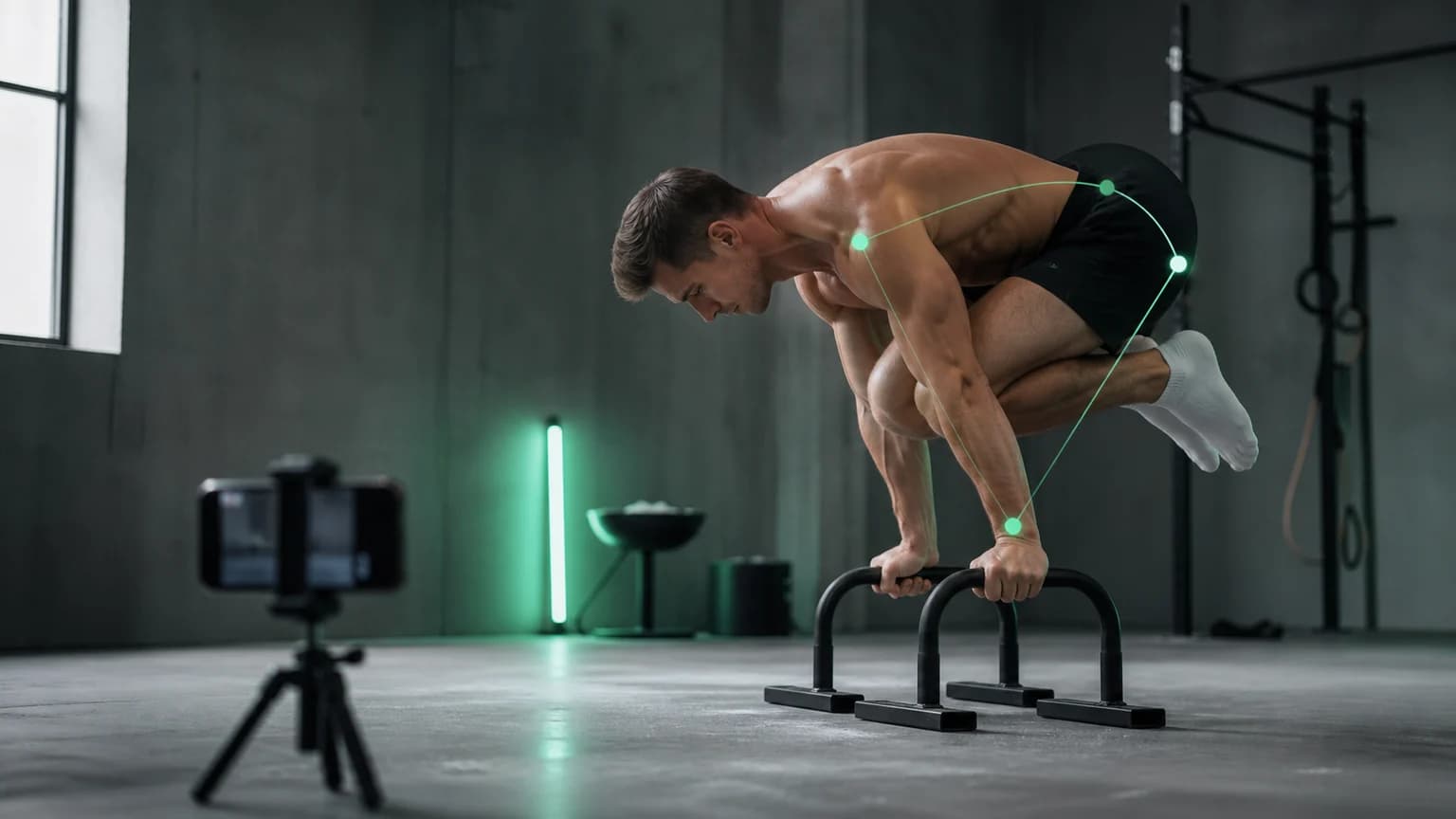
Choose Calisthenics AI when you want to review your own reps and connect video feedback to a progression. Choose Calistree when you want a broad exercise library and visual skill tree. Choose Thenx when you want coached routines and tutorials built around recognizable calisthenics skills. Choose Caliverse when you want accessible bodyweight plans, follow-along sessions and workout customization.
Quick comparison
| App | Best for | Main strength | Important trade-off |
|---|---|---|---|
| Calisthenics AI | Form review and progression tracking | Video feedback for your own movement | Camera angle and your interpretation still matter |
| Calistree | Exploring progressions and exercise options | Large library, equipment filters and skill tree | Breadth can require more decisions from you |
| Thenx | Coached programs and skill tutorials | Guided routines for strength and advanced skills | You follow the program structure rather than building every detail yourself |
| Caliverse | Flexible bodyweight plans | Free exploration, progressive plans and customization | Check which plans and adjustments sit in the current free or paid tier |
Best for reviewing your own reps: Calisthenics AI
The current App Store listing describes video feedback on form, alignment and range of motion for movements from pull-ups to muscle-ups, alongside skill-goal tracking and personalized programming. This makes it useful when your bottleneck is not finding another exercise but seeing whether your current variation stays consistent.
Record from the same angle, keep the joints and equipment that define the skill in frame, and compare one checkpoint. A single clip cannot establish why a position changed, and automated feedback does not diagnose pain or replace an experienced coach.
Best skill tree and exercise library: Calistree
Calistree’s listing describes more than 1,500 exercises, program generation based on equipment and goals, custom variables such as bands and eccentrics, progress records and a visual skill tree. It fits athletes who want to explore several routes toward a goal and train with different setups at home, in a park or in a gym.
Use the filters to reduce choice. Pick one primary progression and one accessory rather than changing exercises whenever the library shows a new option.
Best for coached routines: Thenx
Thenx focuses on daily recommended workouts, programs and tutorials for skills such as muscle-ups, handstands and planche. It suits someone who wants to press play and follow an established session rather than design the progression from scratch.
Check whether the program’s weekly volume fits your current pushing and pulling capacity. A visually advanced skill does not need daily maximal attempts.
Best flexible bodyweight platform: Caliverse
Caliverse describes progressive plans, follow-along workouts, tutorials, challenges, custom workouts and health integrations. Recent version notes also mention workout adjustments and a guest mode. It is a strong general option for athletes who want structured bodyweight work without committing immediately to one advanced skill.
How to choose a calisthenics app
- Name one six-to-twelve-week goal: strength, muscle-up, handstand, lever or planche.
- Check whether the app adapts to your real equipment and current strict reps.
- Separate workout completion from skill quality. You need both, but they are different signals.
- Read the current privacy label before uploading training video.
- Recheck your local storefront for price, trial, compatibility and in-app purchases.
The free Calisthenics Progression Mapper uses your current reps and hold time to show a stage, a missing prerequisite, a next progression and a weekly practice map. It runs entirely in your browser and requires no account.
Match the app to the skill you are training
For a first strict pull-up, prioritize regression choices, band or foot-assisted options, repeatable rep logging and a plan that also trains your shoulder-blade control. A huge advanced-skill library adds little if the app cannot meet you at zero strict reps.
For a muscle-up, look for separate checkpoints for the pull, transition and dip. An app that records only “completed” or “failed” hides the part you need to improve. Film from the side or a slight front-side angle with the bar, hands, shoulders and hips visible. Keep the setup consistent before you compare two clips.
For a handstand, value short practice scheduling, wall progressions and video that keeps your wrists, shoulders, hips and feet in frame. Total hold time alone can reward a position you cannot yet enter or exit safely. Record the entry, stable portion and exit rather than cropping the clip to the best second.
For a front lever or planche, require prerequisite tracking and load management. Hold time can change when you alter the tuck, scapular position, elbow angle or band assistance. Write down the exact variation so a five-second result means the same thing next week.
A decision-grade two-week trial
Test each candidate with the same small plan instead of browsing its most impressive screens. During week one, enter your real equipment, strict-rep baseline and one skill goal. Build or select two sessions. After each session, record how many choices you had to correct because the recommendation did not fit your level.
During week two, repeat one movement under the same setup. Check whether the app helps you answer three questions: What changed? Which prerequisite limits the next step? What should you repeat in the next session? If it only awards a streak or suggests a harder variation, it has not solved progression selection.
Also test the failure path. Mark a missed session, lower an exercise because recovery is poor and remove a piece of equipment. A useful app should let you adapt without corrupting your history or forcing you to protect a streak.
We used this framework to compare the public workflows described by each developer. We did not assign a numerical score because the listings do not provide equivalent evidence for feedback quality, program adaptation or long-term adherence.
Buyer checklist before you subscribe
- Can you set your actual equipment, including no equipment, low bars, rings or bands?
- Can you record the exact progression, assistance and range of motion rather than only the skill name?
- Does the app explain why it recommends the next step?
- Can you change weekly frequency and replace an unsuitable exercise?
- Can you review previous clips or export useful records?
- Does the privacy label explain how the developer handles uploaded video?
- Can you delete your account and training media?
- Does the paywall show the renewal period and what remains usable without payment?
Check these points inside the current app, not only in screenshots. A free download may still reserve programs, analysis or history for a subscription, and the available offer can differ by storefront.
Use the free mapper before choosing an app
Open the Calisthenics Progression Mapper, select muscle-up, handstand, front lever or planche, then enter only clean reps and honest hold times. Read the prerequisite it identifies and compare the proposed next step with the equipment you actually have.
Take the output into a candidate app and try to build one week around it: one or two focused skill exposures, supporting strength and enough recovery to repeat the movement well. The mapper does not analyze video, prescribe rehabilitation or diagnose pain. It gives you a consistent progression question that makes the app comparison concrete.
Choose the app that helps you repeat that decision with less confusion. A good interface should keep your variation, evidence and next action connected; it should not encourage you to jump to a harder skill because the thumbnail looks more advanced.
Method and disclosure
Doved Studio publishes Calisthenics AI. We reviewed the developers’ current App Store descriptions on 12 August 2026. We did not manufacture ratings, claim hands-on testing we did not perform or treat a developer’s marketing superlative as evidence.
Sources checked: Calisthenics AI, Calistree, Thenx, and Caliverse.